When a client starts wondering what’s next for their company, bring us in early. We work alongside you, not around you, and when the work is done, the relationship is still yours, and stronger for it.
For the trusted advisors to leading middle-market businesses.
What we do for your client, and how we work with you.
Open your profession for what your client gets, what’s in it for you, how we work together before, during, and after a deal, and what stays yours.
CPAsYour books become the reason the deal holds.
What your client gets
An early look at their profit the way a buyer will judge it, months before the buyer’s quality-of-earnings review, so that review confirms the price instead of cutting it.
What’s in it for you
A client who’s ready, and the credit for it. You stay the numbers person through diligence, and the accounting and tax work stays with you after closing.
How we work with you
Before a dealWe build the buyer’s view of earnings from your books and walk you through every adjustment before anyone outside sees it.
During the dealDiligence requests come through you, with context. You’re in the room on tax-sensitive terms, such as how the deal is structured and how the price is allocated.
After closingYour client goes back to you, with a closing you helped shape.
What stays yours Tax advice, audits, and bookkeeping. We don’t do any of it.
You’ll hear “What’s my business worth?” “I got an offer.” “What would I owe in taxes if I sold?”
Say this
“Before you respond to that offer, let’s get an independent read on value and on how a buyer will look at these numbers. I work with a firm that does this every day.”
Wealth advisorsWe get the deal done, so the proceeds arrive ready for you to manage.
What your client gets
A partner to help them get ready and then sell at the best value the market will pay, with better odds of closing on time and far less stress. Plus a clear view of what they’d actually take home: depending on size, only about 60-90% of the price typically arrives in cash at closing, per our sector Outlooks.
What’s in it for you
A seat at the table throughout. With your client’s consent, we bring you in at each step to show what you offer, so you can plan the glide path and prepare for the proceeds well before closing. The deal closes on a date you can plan around, and the money arrives with you.
How we work with you
Before a dealWith your client’s consent, we share the likely value, structure, payout timing, and our market read, so planning starts early.
During the dealWith your client’s consent, you hear the expected closing date as it firms up.
After closingThe proceeds and the relationship stay with you. We don’t recommend a wealth manager or invite the buyer’s bank in.
What stays yours Investment advice and managing the money. We don’t do either.
You’ll hear “I’d like to diversify.” “When can I slow down?” “Private equity keeps calling.”
Say this
“Before anyone makes you an offer, let’s understand what the business is really worth and what you’d actually take home. I know a firm that does exactly this, confidentially.”
Business attorneysThe terms that matter are set before the purchase agreement.
What your client gets
A competitive process that sets the price and key terms at the letter-of-intent stage, while your client still has negotiating leverage, and you review before anything is signed. It works like insurance on the deal: we map the critical path early and get ahead of the issues that sink deals, which improves the odds your client reaches closing.
What’s in it for you
A deal that arrives organized: buyers vetted, a negotiated letter of intent, and diligence run to a timeline. We also handle the issues that can derail a sale: a confidentiality leak, when and how to tell employees, and the right incentives to keep key people. Your hours go to the legal work, fewer surprises reach your desk, and the deal closes clean, with everyone at the table satisfied.
How we work with you
Before a dealWe flag what a buyer’s diligence will find (change-of-control clauses, consents, entity and ownership issues) early enough for you to fix it.
During the dealYou lead the legal documents. We run the buyers, the process, and the business negotiation, and we coordinate every draft with you.
After closingPost-closing matters and your client’s next venture stay with you.
What stays yours Legal advice and the legal documents. We don’t draft or negotiate them; that isn’t our business. Our role is the business side: a second perspective from people who know the company inside and out.
You’ll hear “A buyer sent me a letter of intent.” “Can you look at this NDA?” “My partner and I need to sort out the buy-sell.”
Say this
“Before you sign anything with a buyer, let’s have an M&A advisor who runs competitive sales look at the terms and give you a read on what’s happening in the market. I work with a firm I trust, confidentially.”
Estate attorneysPlan before anyone signs a letter of intent.
What your client gets
A market read on what the business could command and how long a sale takes, so the plan rests on a realistic value and timeline instead of a guess.
What’s in it for you
Time, and a partner who shares your instinct to plan ahead. Our exit-readiness program is built on preparing well before a sale, and much of the planning you might recommend works best then too. We tell you as early as your client allows when a process could start.
How we work with you
Before a dealWe share the likely value range, timing, and shape of a deal (cash at closing, earnouts, seller notes) so you can plan around them.
During the dealWe coordinate with you on ownership changes and signing dates, so nothing in the deal undoes the plan.
After closingThe estate, trust, and family planning stay with you.
What stays yours Legal advice and formal valuations. Our ranges aren’t appraisals for gift or estate tax purposes.
You’ll hear “We need to update the plan.” “Nobody’s taking over.” A buy-sell agreement nobody has read in years.
Say this
“Your plan assumes a value for the business and a path for it. Let’s get an experienced M&A advisor’s read on both, confidentially, before we finalize.”
Commercial real estate brokersThe business decision drives the building decision.
What your client gets
One plan for the business and the building, so a lease or property decision doesn’t box in the business sale, or the other way around.
What’s in it for you
The real estate transaction. When the business sells, the property sells, gets a new lease with the buyer, or stays with the owner as an investment, and its terms are set during the business sale.
How we work with you
Before a dealWe flag when lease terms, or a building held in a separate entity, will matter to buyers.
During the dealThe real estate side stays with you, at your client’s choice, structured alongside the business sale.
After closingIf the owner keeps the property, it stays your relationship.
What stays yours Brokering real estate. We don’t. Real estate brokers work with us through our Partner program, in writing, before any introduction.
You’ll hear An owner unsure about a 10-year renewal. “Should I keep the building as my retirement income?” An expansion on hold “until we figure out the business.”
Say this
“Before you sign a long lease or sell the building, it’s worth knowing what the business is worth and where it’s headed. I work with an M&A firm that looks at both together.”
Commercial bankersPlay proactive defense, so a payoff letter never surprises you.
What your client gets
Options beyond an outright sale: a recapitalization, a partner buyout, or a management buyout, each of which may need a lender.
What’s in it for you
Early notice. A sale usually pays off the loan; knowing early gives you time to keep the relationship, or to lend on the structure that replaces it.
How we work with you
Before a dealWith your client’s consent, we tell you when a process could start and which structures are on the table.
During the dealWhen a deal needs debt, you’re the bank at the table. We don’t shop the financing to other lenders.
After closingOperating accounts and treasury stay where your client wants them. We don’t steer proceeds anywhere.
What stays yours Lending and the banking relationship. We never introduce competing banks or other lenders to a client you refer. If your client wants alternatives, they pursue them on their own.
You’ll hear “I want off the personal guarantee.” “My partner wants out.” Succession questions at renewal.
Say this
“As you plan the next few years, it’s worth knowing what the business is worth today and what your options are. I work with an M&A firm that does this confidentially.”
Business consultants and coachesEvery dollar of profit you help add is worth a multiple of itself in the price.
What your client gets
A buyer’s read on what the improvements you’ve driven are worth, and on the two or three moves that would change the value most.
What’s in it for you
Proof of your impact in a number a buyer pays for, and a firm that builds on your work instead of redoing it.
How we work with you
Before a dealWe share how buyers will judge the business (recurring revenue, a team that runs without the owner, reliable reporting) so your work aims at what they pay for.
During the dealYour read on the team and the operation helps us position the business. With your client’s consent, you stay informed.
After closingIf the owner stays on or keeps a stake, your work with the business can continue.
What stays yours Your engagement. Where our exit-readiness work overlaps with yours, we coordinate with you rather than duplicate it. Consultants and coaches who want a formal role work with us through our Partner program, in writing, before any introduction.
You’ll hear “I want the business to run without me.” “What would this be worth?” A peer-group member who just sold.
Say this
“Before you decide anything, let’s get a buyer’s view of what this business is worth and what would move it. I know an M&A firm that does that confidentially.”
Commercial insurance brokersA sale changes the coverage. Be in the room before it does.
What your client gets
Coverage that helps the deal instead of slowing it: an insurance program and loss history that hold up when buyers review them, and a plan for tail, key-person, and buy-sell policies.
What’s in it for you
A seat at the table before the buyer’s broker arrives. Many buyers move the account at closing; being involved early is the best chance to keep it, or to hand it off cleanly.
How we work with you
Before a dealWe bring you in to review coverage and claims history before buyers see them.
During the dealYou handle the insurance diligence requests, and we coordinate the transition with you: tail coverage, representations and warranties insurance, key-person and buy-sell policies, and benefits.
After closingThe owner’s personal coverage, and any business they keep, stay with you.
What stays yours Placing insurance. We don’t place it or recommend another broker.
You’ll hear “Do I still need key-person coverage?” “Let’s look at the buy-sell funding.” An owner trimming costs ahead of a sale.
Say this
“If a sale is in the next few years, let’s make sure the coverage helps the deal instead of slowing it. I know an M&A firm I trust to look at the whole picture.”
Appraisers and valuation professionalsYour opinion and a market price answer different questions.
What your client gets
Both answers, kept apart: your opinion for its purpose, and a market read on what a buyer might pay, synergies included, and in what form: cash at closing, earnouts, seller notes, or rolled equity.
What’s in it for you
An M&A firm that sends gift, estate, and buy-sell valuation work to independent appraisers and doesn’t second-guess your conclusion.
How we work with you
Before a dealWhen a client asks “is that what I’d get if I sold?”, we explain why the two numbers differ, so your work isn’t called into question.
During the dealIf a sale follows your report, we coordinate so your work and ours don’t collide.
After closingValuation work for the family, trusts, and any entities the owner keeps stays with you.
What stays yours Valuation opinions. We give a market view, never a valuation opinion.
You’ll hear “Is that what I’d get if I sold?” A partner buyout priced off your report. Shares gifted ahead of a possible sale.
Say this
“My report answers what the business is worth for this purpose. If you’re wondering what a buyer would pay in a sale, that’s a different question, and I know a firm that answers it.”
Want a bigger role than the introduction?
Some advisors want to stay involved through the deal. Our Partner program sets that role in writing, case by case, before any introduction.
The best time to introduce us is a few years before your client needs us.
Owners rarely say “I want to sell.” The signal shows up sideways, and you often hear it first. We play the long game. As former operators and private equity investors ourselves, we add the most value when we engage early: there’s time to build value and choose the timing, instead of letting a health event, a partner, or one unsolicited offer choose it for your client.
Headspace
“I’m tired of this.”
“I’m thinking about what comes next.”
Handoff
“My partner wants out.”
“The kids don’t want to run it.”
Homefront
“My spouse wants me to slow down.”
A health scare, or a peer who got sick.
Harvest
“Private equity keeps calling.”
“Everyone in my industry is getting bought.”
If your client has to act now
We move quickly.
A health event, a partner dispute, or an offer already on the table. We run a competitive process on a tight timeline and protect the price and terms your client can still get.
If your client has time
We can help them get ready first.
Most owners have more time than they think. We help them build value before any transaction, often over 12 to 24 months through our exit-readiness program, and you stay at the center of their planning.
Who we’re best for
Founder- and family-owned businesses worth roughly $25 million or more, which typically means $3 million or more of annual profit (EBITDA). Not sure your client fits? Call anyway. With a few questions, we can usually size it up without you naming your client, and if the business is below our range, we’ll still give an honest read and point your client to the right fit.
What your client gets
A senior dealmaker’s read on the business, at no cost.
Every client you introduce gets a senior conversation and a written read on their options. It costs them nothing and commits them to nothing.
1
A confidential conversation
With a senior member of our team, within two business days of your introduction.
2
A Strategic Option Review
About two hours of your client’s time, then a short written readout:
An indicative value range, and how much is likely to arrive as cash at closing
The adjustments to profit a buyer will test
Who would buy, and what each would focus on
The two or three moves that would change the value most
The options: build value, raise capital, sell, or wait
Free for businesses in our range: worth roughly $25 million or more.
The review is an indicative read, not a valuation opinion, and it never tells your client to sell. Whether and when to act is their call. It’s also how we both decide whether we’re the right fit. We’re selective and take on a limited number of engagements at a time, so each one gets senior attention.
Our promises to you
What you can count on when you introduce us.
An introduction puts your reputation on the line. These are the rules we hold ourselves to, so it’s safe to make one.
Your client stays your client.
We never suggest a client replace an advisor they already have, and we don’t take on their wealth, legal, or tax work after closing. If a client without an advisor asks us for a name, we give at least two and disclose any relationship. If a deal needs a specialist, we raise it with your client and you together.
You’re never surprised.
With your client’s consent, you hear from us at each stage, in plain terms.
An honest answer, even when it isn’t us.
If we’re not the right fit, we say so, give your client something useful anyway, and point them to the best fit we know.
Confidential from the first call.
Please share no names or financials until we’ve spoken. We’re always glad to sign an NDA before anything is shared, and your client’s numbers stay confidential.
Free and confidential: about two minutes of questions, then a preliminary value range by email.
What happens next
You introduce usHold names and financials until we’ve spoken.
Within one business dayWe confirm to you that we have it.
Within two business daysA confidential conversation with your client. We ask whether we may keep you updated.
About a week laterYour client receives the Strategic Option Review, and you get a copy if they agree.
One of four pathsWe engage, we build value first, we agree when to revisit, or we refer your client to a better fit. You hear which.
For firms and institutions
Give your whole team an M&A specialist to call.
Banks, wealth platforms, and professional firms partner with us so their people know who to bring in when a client starts wondering what’s next. Your firm keeps the client relationship. We add the transaction expertise, and when the deal closes, your client is still banking, investing, and planning with you.
Equip your team.
Working sessions for your bankers, advisors, or partners on how a sale works, the signals to listen for, and what to say. We’ve presented them to attorneys, corporate bankers, and wealth managers.
Set the rules in writing.
Roles, client primacy, and confidentiality are agreed before the first introduction, in terms your compliance team can review. With each client’s consent, you hear where every introduction stands.
Start with a pilot.
Two or three of your people who serve founder-owned businesses. We meet their clients alongside them, and we review the results together after 90 days, before anyone commits to more.
Why firms do this
A wave of ownership transitions is coming: 88% of business owners plan to exit some or all of their stake within 10 years.1 A sale is the moment a client’s relationships are most likely to move, because buyers bring their own banks, advisors, and plans. Partnering with us lets your firm get ahead of that wave and capitalize on it, instead of hearing about it at closing.
Or email info@mccombiegroup.com with “Firm partnership” in the subject line.
1. Raymond James, 2025 Business Owner Report: survey of 540 owners of privately held businesses, April 2025; includes partial and full exits.
Who you’ll hear from
Every introduction gets a senior response.
“I’ve bought, run, and sold businesses myself, so I know what your client is about to go through, and how much it matters who’s in their corner. When you send us someone, a senior member of our team responds, and you hear back.”
David W. McCombie IIIFounder & Chief Executive Officer
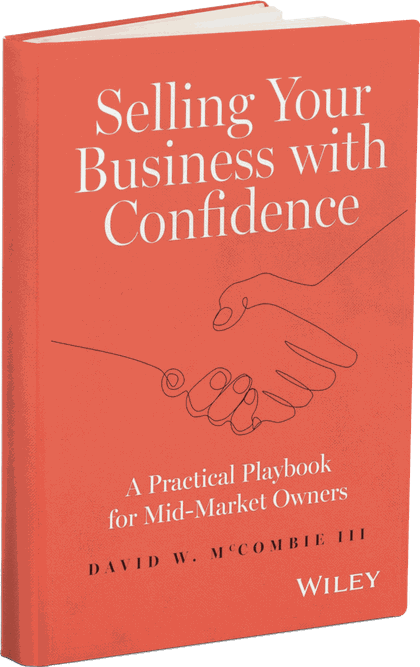
Author of Selling Your Business with Confidence (Wiley, 2024). David also serves on the executive committee of the Miami chapter of YPO, the global community of chief executives.
No. The relationship stays yours, we stay out of your lane, and we never suggest a client replace an advisor they already have. When the work is done, your client goes back to you.
What size business is right for you?
Founder- and family-owned businesses worth roughly $25 million or more, which typically means $3 million or more of annual profit. Smaller, or not sure? Call anyway. We’ll tell you honestly whether we fit and, if not, who does.
What if my client isn’t ready to sell?
Most aren’t, and that’s often the best time to talk. We may suggest building value first, or simply agree on when to revisit. Either way, your client leaves with a clearer picture of their options.
What if my client has to sell now?
Then we move quickly. A health event, a partner dispute, or an offer already on the table calls for a competitive process on a tight timeline, and we’ll tell you and your client plainly what that timeline can and can’t achieve.
Do you pay referral fees?
Not by default. Your profession may limit referral compensation, and your recommendation carries the most weight when your client knows you have nothing riding on it. If you’d like a formal arrangement, we’ll structure it to fit your profession’s rules. Advisors who want to stay involved through a deal can also join our Partner program.
Do you partner with firms, not just individual advisors?
Yes. Banks, wealth platforms, and professional firms work with us under a written agreement that sets out roles, client primacy, and confidentiality, usually starting with a small pilot. See how it works.
Will my client’s information stay confidential?
Yes. Please share no names or financials until we’ve spoken. We update you only with your client’s consent, and only on where things stand.
Can your range be used for estate or tax purposes?
No. It’s a preliminary, indicative read, not an appraisal. For gift, estate, buy-sell, or tax work, your client needs a qualified appraiser, and we’re glad to coordinate.
What does it cost your client?
The first conversation and the Strategic Option Review cost nothing. If your client engages us, fees are set in a written agreement; our public Fee Benchmark shows what sell-side fees typically look like.
What if you’re not the right fit?
We tell you and your client directly, give your client something useful anyway, and refer them to the best fit we know. Your client still benefits from your introduction, and so does your reputation for making it.
McCombie Group does not provide legal, tax, or accounting advice. The Strategic Option Review and Get Your Range are preliminary and indicative. They are not valuation opinions or appraisals and are not intended for estate, gift, lending, buy-sell, or tax purposes. Subject to diligence and final financial review.
Know a client who’s starting to wonder what’s next?
Call us, or send the introduction. A senior member of our team will respond, and no names are needed until we’ve spoken.