Our Most Limited Resource Is Energy
Founder equity and liquidation preferences, turning a flawed business into a sellable one, when to walk away from a poor-fit engagement, and separating who you are from the company you built.
We write and talk openly about how businesses are built, funded, and sold: our own articles and videos, plus podcasts, press, and talks. They cover what owners ask most: when to sell, what buyers pay for, how private equity thinks, and the human side of letting go.
Founder equity and liquidation preferences, turning a flawed business into a sellable one, when to walk away from a poor-fit engagement, and separating who you are from the company you built.
Buyers and QoE teams now run AI across your whole data room. Clean books can close in days; messy ones drag for months and cost you at closing.
Why almost no industry is immune: AI-enabled competitors take customers even when AI can’t do the work. Two honest paths for owners, with the bias disclosed.
What adjusted EBITDA is, which add-backs buyers accept, negotiate, or reject, and how to document yours before a sale. From a sell-side advisor and Wiley author.
What a quality of earnings report is, what GF Data shows about QoE and price over time, and why no surprises in diligence matters more than the multiple.
What M&A advisors and investment bankers charge to sell a business, how retainers and success fees work, which terms matter, and what the research says.
The difference between a business broker, an M&A advisor, and an investment bank, which one fits your company’s size, and how to choose an advisor you can trust.
A decision framework for second-generation owners weighing growth against a sale, the signals that point each way, and the options between keeping and selling.
What a management buyout is, how an MBO is funded, its advantages and trade-offs for the seller, and how to give your team a fair shot without hurting your price.
How private equity firms make money, what they look for, how rollover equity creates a second bite of the apple, and what changes after you sell to a PE firm.
Why the sale price isn’t what you take home: how earnouts, seller notes, rollover equity, escrows, and working capital work, and how to compare offers fairly.
How private businesses are valued in a sale, the three forces that set the multiple, six factors that drag value down, and how to raise yours before you sell.
What buyers ask for in due diligence when you sell a business, who will be checking, what slows deals down, and how to get your documents ready in advance.
39 min
Founder equity and liquidation preferences, turning a flawed business into a sellable one, when to walk away from a poor-fit engagement, and separating who you are from the company you built.
Why founders should build value well before a private equity buyer comes calling.
39 min
Why an exit is about more than valuation: preparing early, choosing the right buyer, the emotional transition, seller’s regret, and how AI is starting to affect mid-market values.
47 min
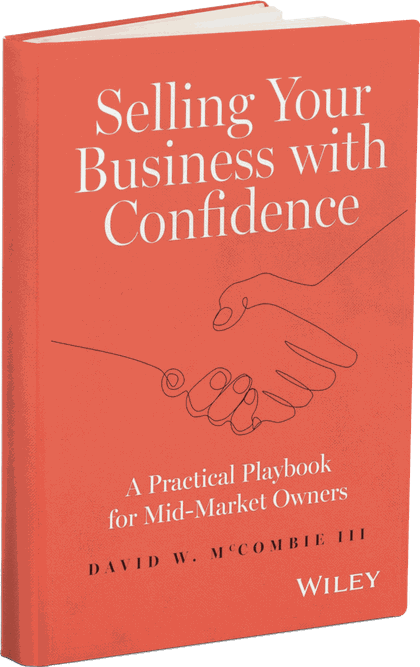
How mid-market deals get done, David’s path from entrepreneur to dealmaker, and the thinking behind Selling Your Business with Confidence.
Strategies for mid-market owners preparing to sell, and the common pitfalls that cost them value or the deal.
Where buyers form their first impressions of a business, and how sellers can shape them.
Why a good exit is about more than the check: finding what motivates you in the next stage of life.
A fireside chat at the Haitian American Chamber of Commerce of Florida’s 2025 summit, with full transcript.

41 min
Exit-planning fundamentals: preparing early, what a good advisor adds, how buyers value a business, finding the right fit, and the timing mistakes owners make.
The psychology of selling: timing, negotiation, and the owner’s transition after closing.
43 min
Treating an exit as an emotional journey as much as a transaction: sale readiness, and what comes next for the owner.
When is the right time to sell a business? David on how owners should think about the timing of a sale.
How to value a business before a sale, how to make it more sellable, and the emotional side of exiting.

49 min
How revenue models drive what buyers pay, the mistakes sellers make, how private equity structures deals, and why exit planning should start early.
Why private equity is buying commercial HVAC and mechanical contractors, and what owners can do to raise their value before a sale.
An independent review of the book.
A Spanish-language interview on the book and why so many owners are unprepared when it is time to sell.
The emotional side of selling a business, and how owners can prepare for it before the process starts.
Rollover equity: how it works, how long you hold it, and the second bite at the apple.
Dealmaking, and what it takes to sell a business well.
The launch of Selling Your Business with Confidence, and how the sale process works from the owner’s side of the table.
David’s column on mid-market M&A and private equity ran from 2020 to 2024; the pieces reposted on our site are listed under Articles.

Why private equity has driven insurance agency consolidation, what buyers favored, and where the market stood in 2024.
Why David hired a banker to sell a business of his own, and what an advisor can do that an owner can’t.
The three phases of a middle market sale, and why most take 7 to 10 months.

Growing from $1M to $10M and beyond: focusing on local markets, tightening operations, and planning the exit early.
Eight reasons a business sale is nothing like a real estate deal.

Why owners often feel adrift after a sale: the loss of identity, purpose, and structure, and the questions to answer first.
What it costs to hire an investment banker to sell a business: the usual fee components, and how fees vary with deal size.
Why truly comparable sales are rare, and how comparisons go wrong.

Why private equity has turned to HVAC service companies, and what it means for owners.
Earnouts, seller notes, and rollover equity, and why the headline price can mislead.
The main reason many owners fail to sell, with examples of the risks that keep buyers away.
How private equity works, the role it plays in the financial system, and why it matters to business owners.
The five kinds of adjustments that turn reported EBITDA into adjusted EBITDA.
A Q&A profile of David and McCombie Group.
Why healthcare deals faced headwinds in 2024: Medicare Advantage rate cuts and growing political pushback on private equity.
David’s background, McCombie Group’s focus on founder- and family-owned businesses, and the ideas behind Selling Your Business with Confidence.
Four reasons we expected M&A volume to rise in 2024 over the prior year.
Why one business commands a higher multiple than another: growth, risk, and supply and demand.

Why owners of private mid-market companies often misjudge what their business is worth, and how to get a realistic read.

The case for hiring an investment banker to sell a business, weighed against the cost.

How pandemic stimulus, supply chains, and labor shortages led to the inflation and rate increases business owners faced in mid-2022, and the risks they created.

The basic playbook private equity uses to create value after it buys a company.

How private equity firms operate, explained for business owners.

Why deals fall apart between the letter of intent and closing, and how sellers can keep them on track.

The signs of rising inflation in 2021 and five strategies David McCombie suggested to owners at the time: pricing, buying, costs, debt, and close monitoring.

How to choose an investment banker for what is, for most owners, a once-in-a-lifetime sale.

Why candor after the letter of intent protects both the deal and the seller.

David McCombie’s January 2021 column on expected capital gains tax changes, valuation multiples at that time, and how retroactive tax laws had worked before.

Why we expected deal activity to surge in 2021, recession or not.

An October 2020 interview with City National Bank’s Jorge Gonzalez on the Federal Reserve’s Main Street Lending Program: who qualified and how the loans worked.

Levers an owner or CFO can pull to free up cash quickly.
A July 2020 look at how COVID-19 travel limits and a surge in distress could force turnaround firms to rethink staffing, partnerships, and how they serve clients.

The three phases of a turnaround plan, survival, stabilization, and reinvention, written for owners in May 2020, and why the plan needs creditors’ buy-in.
What EBITDA add-backs are, and how buyers and bankers treat them.
A March 2020 column on the early economic signals of the coronavirus pandemic, the recession risk owners faced, and why early preparation beat waiting to see.
How business owners could prepare for shifting U.S.
How to take a realistic view of your company’s value before selling, bringing in partners, or raising capital.
Why buyer fit matters as much as price, and how a poor fit leads to seller’s regret.
The options between keeping and selling a business, for owners facing a generational transition.
On John Deere dealer consolidation after our investment in Atlantic Tractor; David is quoted on the company’s market position.
Coverage of our acquisition of Atlantic Tractor, 11 John Deere dealerships; the deal closed in November 2016.

David wrote the chapter on private equity strategies in this guide for family offices and accredited investors, edited by Kirby Rosplock (Bloomberg Financial Series).
On family offices investing directly and competing with private equity firms for deals. David is quoted.
Family offices as investors in growing companies, and how to approach them. David is quoted.
A case study on how David adapted his writing for busy executives, and why key communications at McCombie Group are still edited and reviewed.
How David helped a family-office client look past an emotional attachment to a weak venture deal.
David W. McCombie IIIFounder & Chief Executive Officer
Author of Selling Your Business with Confidence (Wiley, 2024).
David also serves on the executive committee of the Miami chapter of YPO, the global community of chief executives.
A confidential conversation, or a realistic view of your range. Both are free, and both are useful even if you do nothing for years.
Free and confidential: about two minutes of questions, then a preliminary value range by email.
Most owners who talk to us aren’t selling yet.
Hosting a show for owners, investors, or advisors? Request an interview.
Podcasts, interviews, events, and press coverage on this page are produced and published by third parties, and their links open the host’s site. Everything here reflects views at the time it was recorded or written and is shared for general information only. Nothing here is an offer of securities, investment advice, or legal or tax advice.