~$2B
in closed M&A transactions.
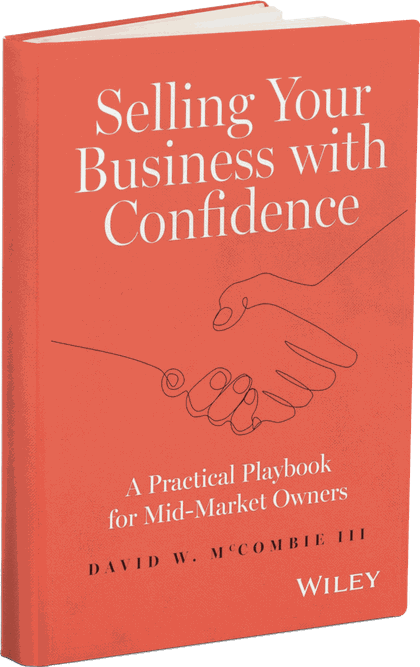
 Best-seller


Fifteen plain-English questions show how your financials would likely hold up if a buyer looked today, and which fixes would matter most.
No accounting background needed. Then hand Part 2 to whoever keeps your books for the detailed version, including a QuickBooks-specific check.
Once a letter of intent is signed, the buyer hires accountants, attorneys and other specialists whose job is to find what’s wrong. Anything they can’t verify becomes a reason to lower the price, move part of it into escrow or an earn-out, or walk away. Not every signed deal survives it: in a 2025 review of 75 lower middle market deals that fell apart after a signed letter of intent, diligence findings and earnings that came in lower under the buyer’s review accounted for nearly half. Keeping a deal together all the way to closing is a large part of what a good advisor does, and it starts with books that hold up.
Source: Axial, Dead Deal Report: Unpacking 2025’s Broken LOIs (diligence findings 25.3% and earnings discrepancies in the buyer’s review 21.3% of broken LOIs).
Your books are tied to bank statements and tax returns. Revenue the bank can’t support doesn’t count.
Cash-basis numbers are rebuilt on accrual, and every add-back is tested against its documents. Buyers also judge how sustainable that profit is: whether it rides on a few customers, on you, or on one-time wins. What can’t be proven, or looks at risk, gets discounted.
Working capital, debt and debt-like items are set from your balance sheet. Each one moves the cash you receive, not the headline price.
Best-seller
A confidential conversation turns your answers into a plan: what a buyer would find, what it could cost you, and what to fix first.
Most owners who talk to us aren’t selling yet.
Indicative self-assessment only. Results reflect your answers and McCombie Group’s judgment about how a buyer’s diligence typically proceeds; your records are not reviewed or tested. This is not an audit, review, compilation, quality of earnings analysis or valuation, and it is not accounting, tax or legal advice. Talk to your CPA, tax advisor or attorney about your situation. Your answers are stored only in your own browser so you can return to them; they are never sent to McCombie Group.
Guidance draws on Selling Your Business with Confidence (Wiley, 2024) by David W. McCombie III, Founder & CEO of McCombie Group. QuickBooks is a trademark of Intuit Inc.; McCombie Group is not affiliated with Intuit.